 Coalition of BC Businesses
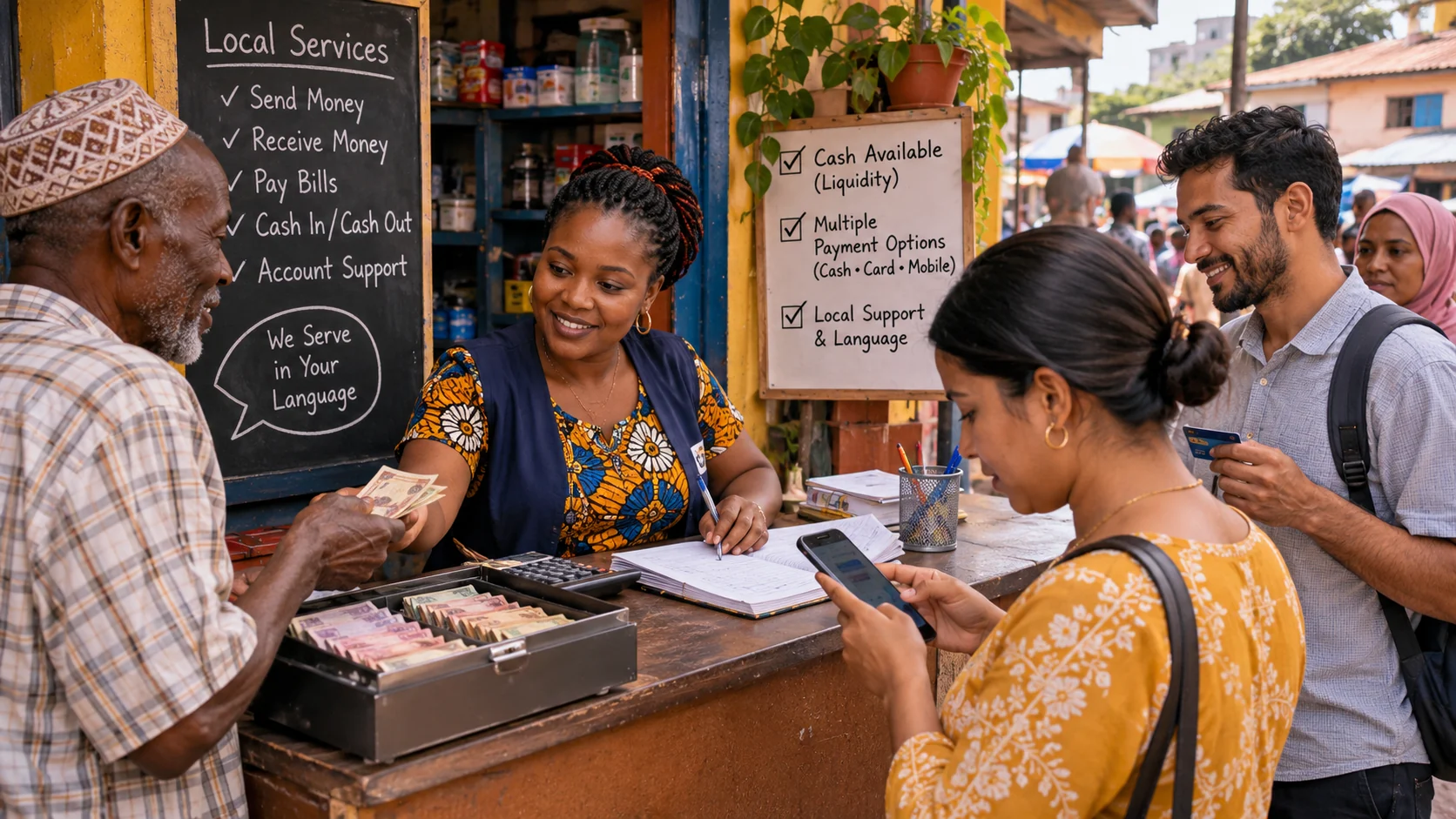
A service model that works in one neighbourhood may be awkward in another, even when the website lists both countries. Payment habits vary by access to banking, trust in digital wallets, demand for cash and the places people already visit for help. A prospective MobCash agent should study these local patterns without turning broad regional stereotypes into facts about individual customers. The most useful design decisions emerge from observed behaviour and approved payment methods.
Observe the way people currently pay
Spend time understanding the routes customers already use for everyday transfers and small purchases. A city with widespread digital wallet use may expect fast electronic confirmation; a market with cash-preference pockets may value a staffed counter. A local method familiar to customers is not automatically approved for agent operations. Check each route with the programme before adding it to signage or instructions.
Design service hours around real enquiries
A payment desk inside a grocery shop can benefit from ordinary opening hours, while a purely mobile setup may need scheduled availability. Avoid promises of round-the-clock access based on app portability alone. Track when people actually ask for help and how much time verification takes. During quieter periods, a small desk may be sufficient; a rush may require queue rules rather than another untrained operator.
The Latin America payment access comparison provides another example of why local familiarity with a wallet or instant-payment rail does not establish programme support.
The local demand assessment explains why local demand matters; compare the distinct market questions in Southeast Asia payment habits rather than applying one pattern everywhere.
A street with cash and wallet customers
A neighbourhood retailer sees some visitors pay in banknotes while others prefer an e-wallet. Instead of advertising every method, the operator checks which are permitted for the agent account and writes a distinct confirmation procedure for each. Customers receive clear information about when payment is accepted and when account credit is final. The approach makes the service more predictable without assuming a universal preference.

Local preference for cash, card or mobile payments affects service hours and cash availability.
Make language and privacy part of the experience
Customers should understand the difference between requesting, processing and completing a transfer. Simple written instructions in a local language may reduce errors, particularly when the app interface is in English. Do not include sensitive customer examples on a public instruction board. Staff should know how to ask for account identifiers discreetly and which support channel handles questions that fall outside agent responsibilities.
The 1xBet Agent programme overview defines the general service, but local payment habits should guide the counter's actual approved workflow and customer explanations.
Local service-design questions
- Which payment methods are common and actually supported by the agent account?
- When do people seek assisted transactions and how long do they wait?
- What language makes account-identifier and status instructions easiest to understand?
- Which privacy expectations should shape counter and screen placement?
- What balance between deposit funding and payout cash does actual demand require?
Match liquidity to payment direction
In a place where most requests are small top-ups, digital balance replenishment can become a priority. In a market with concentrated cash-out demand, available payout funds may determine the practical limits of service. Do not base reserve sizes on national averages without checking the actual counter. A daily cash and status review allows the operator to adjust as local patterns become clearer.
Adapt without guessing
A good agent point learns from its environment and keeps its claims narrowly tied to approved functions. Recheck local arrangements for 2027 and treat changes as reasons to update the workflow, not to reuse an old country's instructions.
#LocalPaymentMethods #MobCash #CustomerNeeds